
ISAAC 2026
The 37th International Symposium on Algorithms and Computation
December 6-9, 2026 · Hangzhou, China
The 37th International Symposium on Algorithms and Computation
December 6-9, 2026 · Hangzhou, China

Mark de Berg (Eindhoven University of Technology)
Title: Single-Source Shortest Paths in Geometric Intersection Graphs
Abstract: Single-Source Shortest-Path (sssp) asks to compute the distance from a given source node to all other nodes in a graph G = (V, E). sssp is one of the most fundamental algorithmic graph problems—perhaps even the most fundamental—and sssp algorithms show up as a subroutine in many applications. In an unweighted graph, the problem can be solved in O(n+|E|) time using breadth-first search, where n := |V|. Now consider a set D of n objects in the plane, such as rectangles, triangles, disks, or pseudodisks. The intersection graph G×[D] is the graph that has D as its node set, and that has an edge between two objects D, D′ ∈ D iff D intersects D′. Since an intersection graph can have Ω(n²) edges, solving sssp by computing its edges explicitly and then running a BFS takes quadratic time in the worst case. The edges of an intersection graph are defined implicitly, however, so there is hope that sssp on intersection graphs can be solved in subquadratic time. In this talk, I will discuss several approaches to developing sssp algorithms for geometric intersection graphs, focusing on the question: which types of objects admit an sssp algorithm with O(n polylog n) running time?

Michal Feldman (Tel-Aviv University)
Title: Combinatorial Contracts: Algorithms, Incentives, and Complexity
Abstract: How should a principal design incentives when the effort of agents is costly and unobservable? Contract theory studies this question through performance-based payments. In many modern environments, however, the challenge is also computational: the space of possible actions or teams can be enormous, and finding the right contract becomes an algorithmic problem. This perspective has led to the emerging area of algorithmic contract design. In this talk I will discuss recent progress on combinatorial contracts, where complexity arises in two natural ways: from the many possible combinations of actions an agent may take, and from the many possible compositions of a team of agents whose efforts jointly determine the outcome. I will present several models capturing these scenarios and highlight the algorithmic and complexity questions they raise. The results reveal a rich landscape that includes polynomial-time algorithms under structured reward functions, approximation guarantees in more general settings, and hardness barriers. Overall, these results illustrate how tools from algorithms and economic theory interact in the study of incentives, and point to a range of open problems at the frontier of algorithms and incentives.
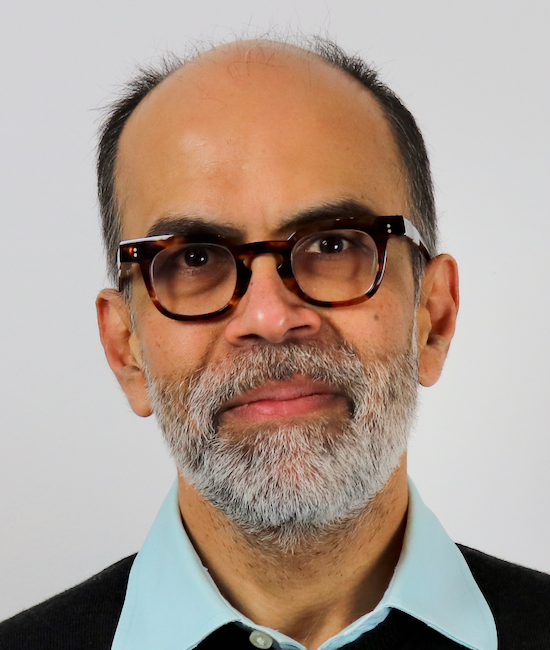
Anupam Gupta (New York University)
Title: Revisiting Old Assumptions: How Much Clairvoyance Does a Job Need?
Abstract: Suppose jobs arrive over time and have to be scheduled on a single server. Jobs can be paused and then resumed. We want to minimize the average response time (aka flow time). It is not difficult to show that the Shortest Remaining Processing Time (SRPT) strategy is optimal for this problem. In this talk, we revisit the model assumption that the job accurately declares the amount of processing it needs (aka its size) when it arrives. Indeed, this "clairvoyance" may not always be reasonable to assume. We ask: what if we are only given noisy estimates of the size? Alternatively, what if we only learn the size once we have processed the job to some extent? In this talk, I will discuss "robust" algorithms which address these extensions. This talk is based on past and ongoing works with Amit Kumar, Debmalya Panigrahi, and Zhaozi Wang, and with Haim Kaplan, Alexander Lindermayr, Jens Schloeter, and Sorrachai Yingchareonthawornchai.